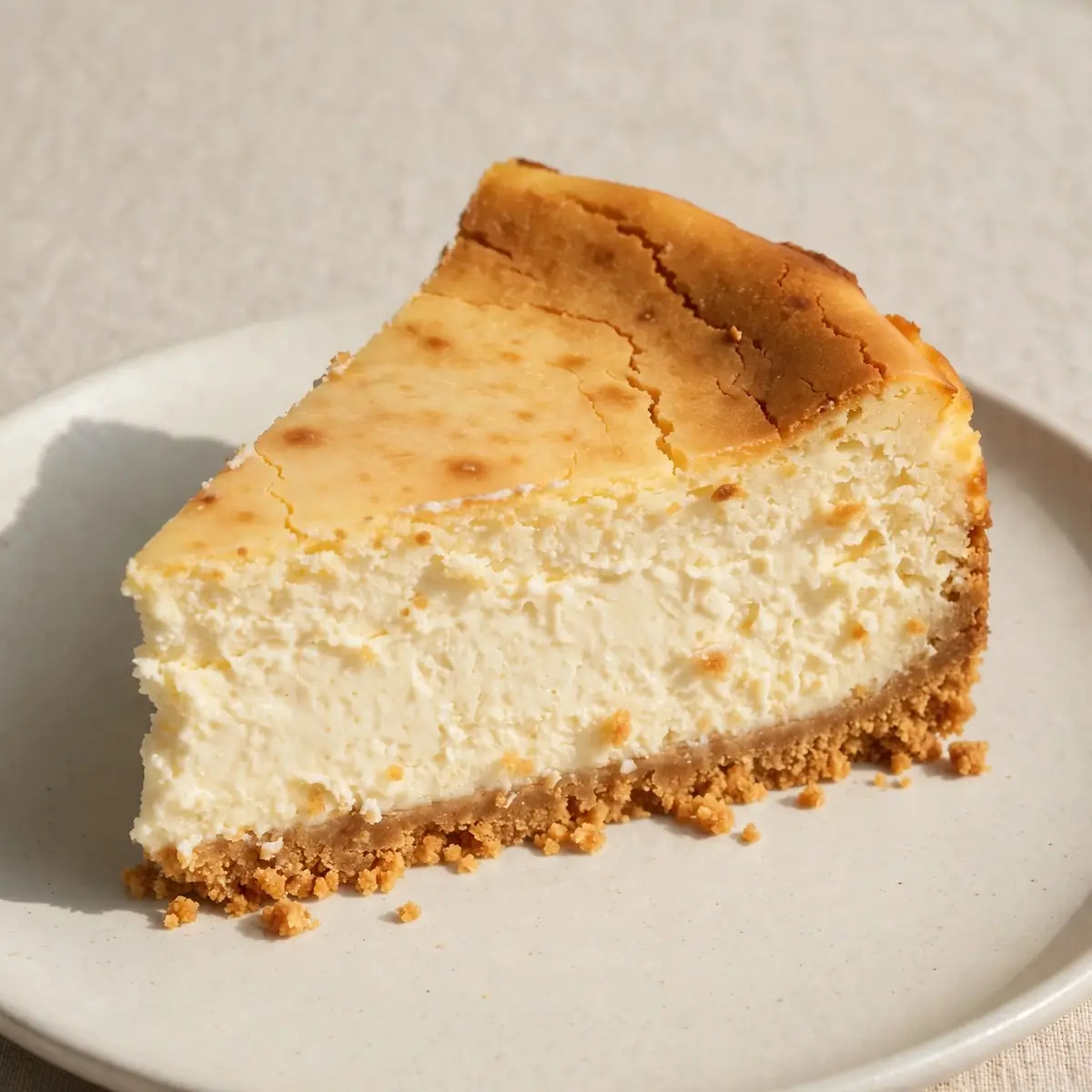
Ingredients
Method
- Prepare the crust: Place the digestive biscuits in a sealed bag and crush them with a rolling pin until they resemble fine, sandy crumbs. Mix with the melted butter until the texture feels like damp sand and holds together when pressed between your fingers. Press this mixture firmly into the base of a 23cm springform tin lined with parchment paper, using the flat bottom of a glass to create an even, compact layer.
- Bake the base: Bake the crust at 160°C (fan-assisted) for 10 minutes. You’ll know it’s ready when the aroma of toasted butter fills your kitchen and the edges have turned a shade darker, like golden honey. Set aside to cool completely.
- Make the filling: In a stand mixer fitted with the paddle attachment, beat the cream cheese on medium speed for about 2 minutes until it looks smooth and glossy, with no visible lumps. Add the sugar and flour, then beat for another minute until the mixture feels light and airy when you lift the paddle.
- Incorporate the flavourings: Add the vanilla extract, lemon juice, and salt, mixing on low speed until just combined. The batter should smell fragrant and bright, with the lemon cutting through the richness.
- Add the eggs gradually: With the mixer on low, add the whole eggs one at a time, followed by the egg yolks. Scrape down the bowl after each addition. The batter should look silky and uniform, with a pale ivory colour and a consistency similar to thick double cream.
- Fold in the cream: Gently fold the double cream into the batter using a rubber spatula. Stop as soon as you see no white streaks — overmixing at this stage introduces air bubbles that will cause cracks during baking.
- Pour and water bath: Pour the filling over the cooled crust. Wrap the outside of the springform tin tightly with two layers of foil, then place it in a deep roasting tray. Pour boiling water into the tray until it reaches halfway up the sides of the tin. The steam will keep the cheesecake moist and prevent the top from splitting.
- Bake low and slow: Bake at 150°C (fan-assisted) for 55 to 65 minutes. The cheesecake is done when the edges are set and slightly puffed, but the centre still wobbles like jelly when you gently shake the tin. The surface should be a pale, matte gold with no browning.
- Cool in the oven: Turn the oven off and leave the door slightly ajar using a wooden spoon. Let the cheesecake rest inside for one full hour. This gentle cooling prevents the top from collapsing and cracking.
- Chill overnight: Remove the cheesecake from the water bath, peel off the foil, and transfer to a wire cooling rack until it reaches room temperature. Then cover loosely with cling film and refrigerate for at least 6 hours, but ideally overnight. The texture will firm up beautifully, and the flavours will deepen.
Notes
For best results, use full-fat cream cheese and ensure all ingredients are at room temperature. Chilling overnight is essential for the perfect texture and flavor.