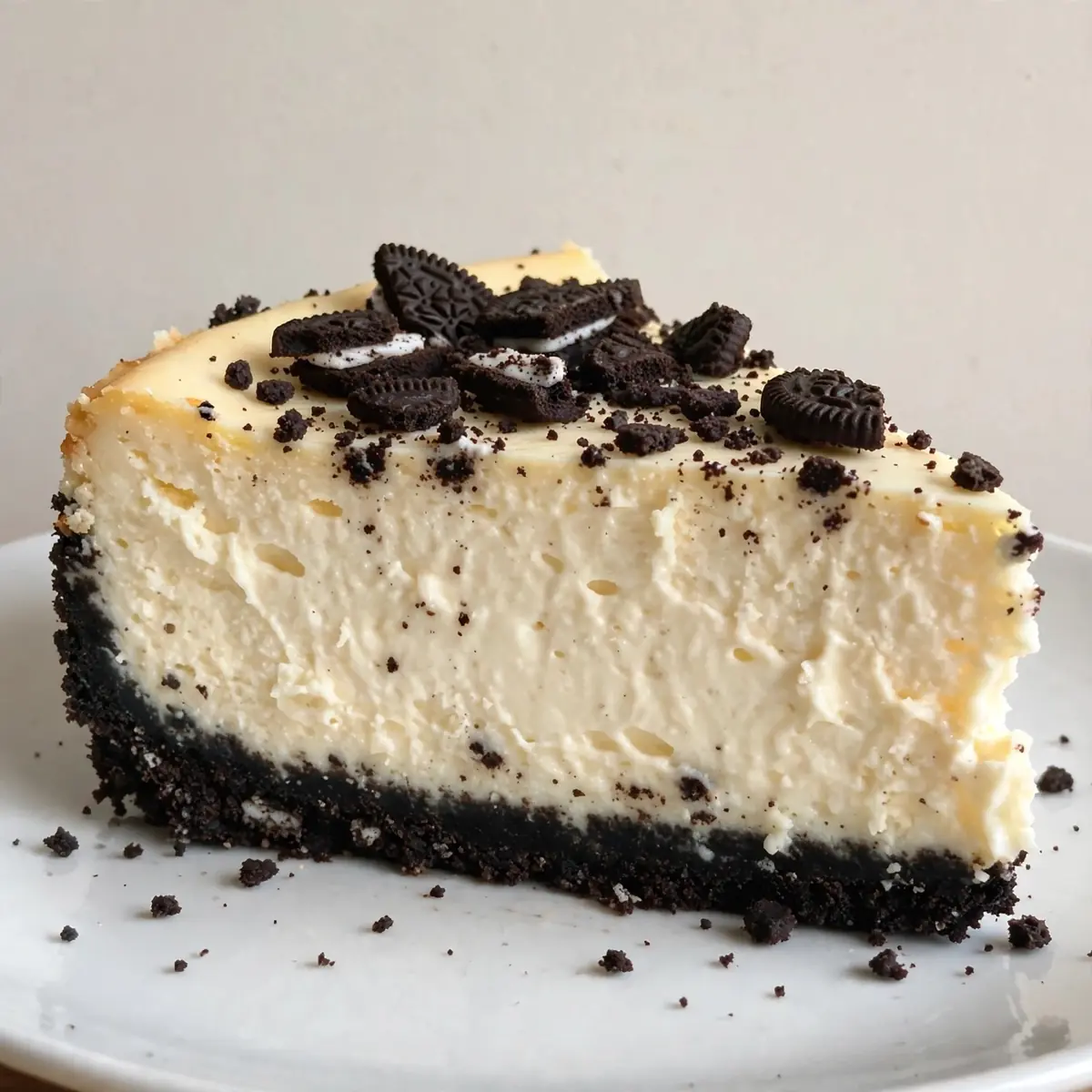
Ingredients
Method
- Prepare the Crust: Preheat your oven to 160°C (140°C fan). Place the Oreo cookies (filling and all) into a food processor and blitz until they form fine, dark crumbs that smell deeply of cocoa. Pour in the melted butter and caster sugar, then pulse until the mixture looks like wet, dark sand and clumps together when pinched.
- Form the Base: Tip the mixture into a 23cm springform tin. Press it firmly and evenly into the base, using the bottom of a glass for a perfectly flat, compact layer. The crust should feel solid, not crumbly, and have a uniform, dark colour. Bake for 10 minutes, then set aside to cool completely on a wire rack. You will hear a faint crackling sound as it cools.
- Start the Filling: In a large mixing bowl, beat the room-temperature cream cheese with a stand mixer or hand mixer on medium speed until it is completely smooth and has a glossy, lump-free appearance, about 2 minutes. Scrape down the sides of the bowl with a spatula.
- Add Sugar and Flavourings: Add the caster sugar, vanilla bean paste, and lemon juice. Beat on low speed until just combined. The mixture will look creamy and pale, and the sugar will begin to dissolve. Be careful not to overmix at this stage.
- Incorporate the Eggs: Add the eggs, one at a time, mixing on low speed after each addition until the yolk disappears into the batter. The mixture should be thick, smooth, and have a pale yellow hue. Overmixing now will incorporate too much air, leading to cracks.
- Finish the Batter: In a small jug, whisk the double cream and cornflour together until the cornflour dissolves completely, creating a thin, milky slurry. Pour this into the cream cheese mixture and fold gently with a spatula until the batter is uniform, silky, and has a slight sheen.
- Bake the Cheesecake: Pour the filling over the cooled crust. Gently tap the tin on the counter to release any air bubbles. Place the springform tin into a larger roasting tray and pour hot water from the kettle into the roasting tray until it reaches halfway up the sides of the springform tin. Bake for 55–65 minutes, or until the edges are set and look pale golden, but the centre still has a noticeable wobble, like a firm jelly.
- Cool and Chill: Turn off the oven and leave the cheesecake inside with the door slightly ajar for 1 hour. This gentle cooling helps prevent a dramatic temperature shock. Remove the cheesecake from the water bath, run a thin knife around the edge, and let it cool completely on a wire rack. The surface will feel set but still soft. Refrigerate for at least 6 hours, or preferably overnight, until the cheesecake is completely firm and cold.
Notes
Use room temperature cream cheese and eggs for a smooth batter. Do not overmix after adding eggs to avoid cracks. Chilling overnight is recommended for best texture.