Ingredients
Method
- Prepare the base: Preheat your oven to 160°C (140°C fan). Blitz the digestive biscuits in a food processor until you have fine, sand-like crumbs — you should hear a soft, uniform rustle with no chunks. Pour in the melted butter, demerara sugar, and cinnamon, then pulse until the mixture clumps together when pressed between your fingers. Press this firmly into the bottom of a 23cm springform tin lined with baking parchment, using the flat bottom of a glass to create an even, compact layer. The base should feel solid and cohesive, not crumbly.
- Bake the base: Bake the base for 10 minutes until it is fragrant and the edges have taken on a slightly deeper golden colour. The kitchen will smell warmly of toasted biscuits and cinnamon. Set aside to cool completely while you make the filling.
- Make the filling: In a large bowl using a stand mixer with the paddle attachment (or a hand mixer), beat the cream cheese on medium speed for 2 minutes until it is silky smooth with no lumps — the texture should be like thick, whipped butter. Add the caster sugar and vanilla bean paste, then beat for another 2 minutes until the mixture is light, fluffy, and has visibly paled in colour. Scrape down the sides and bottom of the bowl thoroughly.
- Add the eggs and cream: With the mixer on low speed, add the eggs one at a time, beating gently after each addition until just combined. The mixture should look glossy and unified, not curdled. Pour in the double cream and the flour, then mix on the lowest setting until just incorporated. The final batter should be thick, smooth, and pour off the paddle in a slow, heavy ribbon.
- Prepare the water bath: Wrap the outside of your springform tin tightly with two layers of heavy-duty foil, ensuring no seams are exposed where water could seep in. Place the tin in a large roasting dish. Pour the cheesecake batter over the cooled base, smoothing the top with a spatula. The surface should be level and free of any air bubbles — tap the tin gently on the counter to release any hidden ones.
- Bake the cheesecake: Pour boiling water into the roasting dish until it reaches halfway up the sides of the springform tin. Carefully transfer to the oven and bake for 60–70 minutes. At the 50-minute mark, check the cheesecake — the edges should be set and puffed slightly, but the centre 5cm should still wobble like firm jelly when you gently shake the tin. The surface should be a pale, uniform beige with no browning.
- Cool slowly: Turn the oven off, crack the door open slightly with a wooden spoon, and leave the cheesecake inside the water bath for 1 hour. This slow cooling is the secret to a crack-free top. After an hour, remove the cheesecake from the water bath, run a thin knife around the edge to release it from the tin, and let it cool completely on a wire rack. The surface should feel set but still soft to the touch. Refrigerate uncovered for at least 6 hours, ideally overnight, for the firmest, cleanest slices.
- Make the salted caramel: In a deep, heavy-bottomed saucepan, combine the caster sugar and water. Stir gently with a clean spatula until the sugar looks like wet sand — do not stir once it is on the heat. Bring to a boil over medium-high heat and cook until the mixture turns a deep amber colour, about 8–10 minutes. Watch carefully: it will go from pale gold to rich chestnut very quickly, and the smell will shift from sweet to nutty and complex. Immediately remove from the heat and carefully pour in the warmed cream — it will bubble up violently, so stand back. Whisk until smooth, then add the cubed butter and 1½ teaspoons of sea salt, whisking until the sauce is glossy, thick, and perfectly emulsified. Let it cool to room temperature — it will thicken further as it cools.
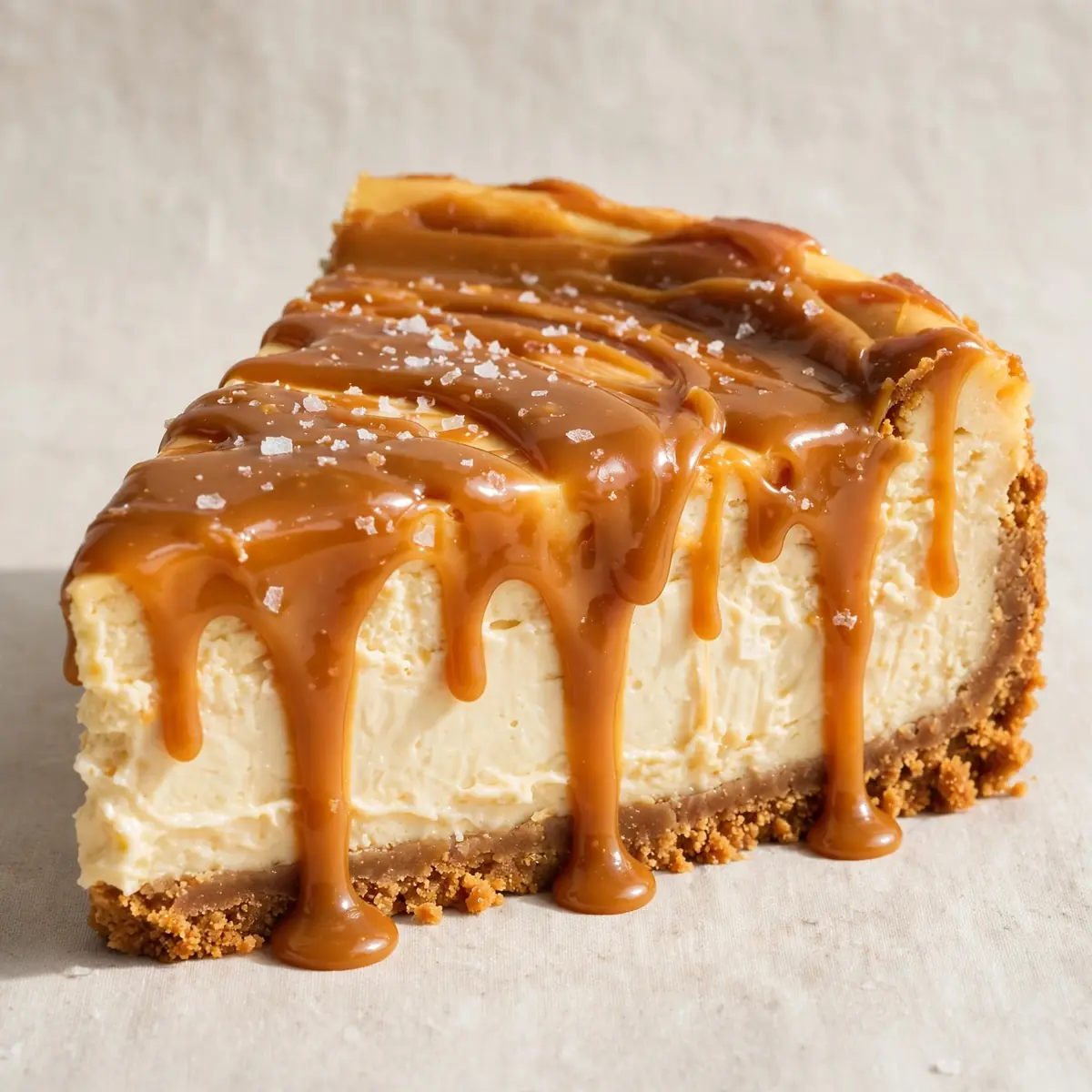
- Plate and serve: To achieve a restaurant-quality presentation, run a hot, dry knife under boiling water, wipe it clean, and slice the cheesecake in one smooth, confident motion. Place each slice on a chilled plate. Warm the caramel sauce gently until it is pourable, then drizzle it artfully over the slice — let it cascade down the sides in uneven ribbons. Finish with a final pinch of flaky sea salt on top of the caramel. The contrast of the pale, creamy cheesecake, the glossy amber caramel, and the white crystalline salt is visually stunning.
Notes
For best results, use full-fat cream cheese at room temperature and chill the cheesecake overnight. The water bath is essential for even baking and preventing cracks. Watch the caramel closely as it can burn quickly.